


The THC Drink Ban Has Two Deadlines Now, Not One
Current as of September 13, 2026. Federal hemp law is moving weekly right now — the date on this sentence matters. This is general information from a beverage founder, not legal advice.
On September 2, the President signed a stopgap funding bill that pushed most of the coming federal hemp restrictions back by thirty days, from November 12 to December 11, 2026.
Almost every article you will find about this says the deadline moved. That is true and it is incomplete. One category of product did not get the extension. It still loses federal hemp status on November 12, exactly as originally scheduled.
Two dates. Different products. If you are a retailer planning inventory, a distributor planning routes, or someone who just wants to know what happens to the drinks in your fridge, the difference is the whole thing. Here it is, straight.
Table of Contents
- What actually happened on September 2
- When does the THC drink ban take effect?
- Which products keep the November 12 date
- What the 0.4 milligram cap actually means
- Where that leaves our drinks, specifically
- The bills that could still change this
- The deadlines nobody is discussing
- What a founder does with ninety days
- What to actually do about it
- Frequently asked questions
- Where we stand
- What we are watching
What Actually Happened on September 2
A stopgap government funding bill, H.R. 6500, delayed most of the new federal hemp restrictions by thirty days. The Senate passed it 90 to 6 on August 8, the House passed it 370 to 48 on September 1, and the President signed it on September 2. The bill funds the federal government through December 11, 2026, and moves most of the hemp changes to that same date.
The underlying law is not new and it is not a proposal. Public Law 119-37, signed on November 12, 2025, rewrote the federal definition of hemp inside a broad appropriations package. It gave the industry a one-year runway, which originally landed on November 12, 2026. September's stopgap moved most of that to December 11.
One more thing worth knowing, because it shapes everything below: the White House reportedly told Senate Republicans in August that a thirty-day delay would be the last extension it supports. That was a private commitment relayed in a closed meeting rather than a formal public position — but planning on another extension is a bet, not a plan.
When Does the THC Drink Ban Take Effect?

December 11, 2026, for most hemp-derived cannabinoid products — including THC beverages made with naturally occurring delta-9. That is the date the new federal definition of hemp applies, including the total-THC standard and the per-container cap.
November 12, 2026, for one specific class: products containing cannabinoids the cannabis plant cannot naturally produce. Those did not get the extension.
Until each date arrives, the federal definition from the 2018 Farm Bill remains the operative federal standard. The change is scheduled, not retroactive — nothing on a shelf today was redefined by what happened on September 2.
State law runs on its own clock entirely, and in some states it is already stricter than the federal line. Where you live still matters more than any federal date for what you can actually buy this week.
Which Products Keep the November 12 Date
The November 12 date applies to products containing cannabinoids that the cannabis plant cannot naturally produce. In practice, that is the lab-created and converted cannabinoid category: delta-8 THC, HHC, THC-O and similar compounds made through chemical conversion rather than grown.
There is a fine distinction inside the law worth getting right, because it is where most summaries go wrong. The statute contains two separate exclusions. Cannabinoids the plant cannot produce at all lose hemp status on November 12. Cannabinoids that can occur naturally but were synthesized or manufactured outside the plant fall under a different provision — and that one is among the provisions delayed to December 11. Those are not the same category, and a product can land in either depending on how it was made rather than what it is called.
For anyone stocking a cooler: a delta-8 seltzer and a naturally-derived delta-9 seltzer now have different federal deadlines, roughly a month apart. They have historically been shelved together and discussed together. As of September 2 they are on separate clocks.
What the 0.4 Milligram Cap Actually Means

The new definition changes the federal yardstick in two ways at once, and the second one is what reaches finished beverages.
First, hemp is now measured by total THC — including THCA and other tetrahydrocannabinols such as delta-8 — rather than delta-9 alone, at or under 0.3% by dry weight. Second, and more consequentially for anything in a can: a finished hemp-derived cannabinoid product falls outside the hemp definition if it contains more than 0.4 milligrams of total THC and other cannabinoids with similar effects, combined, per container.
That full phrasing matters. The cap is not only on THC — it is on the combined total of THC and other cannabinoids with comparable effects, which makes it broader than most summaries suggest.
And it is per container. Not per serving, not per percentage. That distinction is doing enormous work:
| Product | Total THC | vs. the 0.4 mg cap |
|---|---|---|
| One 5 mg gummy | 5 mg | 12.5x |
| One 10 mg beverage | 10 mg | 25x |
| A 20-count jar of 5 mg gummies | 100 mg | 250x |
It is difficult to see how any beverage that produces a noticeable effect in an adult fits under 0.4 milligrams per container. This is not a formulation problem that a better emulsion solves — at that threshold, the question is whether the product category as it currently exists can clear the line at all.
One genuine open question remains: the law defines a "container" as the innermost wrapping or vessel in direct contact with the product, and directed the FDA to publish further specificity along with lists of the cannabinoids it covers. The FDA missed its deadline for that work and, as of early September, had not published it. Businesses are planning against a standard whose edges are not fully drawn.
Where That Leaves Our Drinks, Specifically
We would rather say this plainly than have you work it out from a chart. Happie's Delta-9 beverages are 5 mg and 10 mg per can, for adults 21 and over. Against a 0.4 milligram per-container cap, those are 12.5 and 25 times the limit. As the law is currently written, our THC drinks do not clear it on December 11.
Every honest brand in this category is in the same position. There is no reformulation that preserves what a THC beverage is while landing under 0.4 milligrams per container, and any brand suggesting otherwise should be asked to show the math.
To be equally clear about what follows from that: we have no intention of selling products into non-compliance. We are tracking the legislative picture weekly, we are planning against the range of outcomes rather than betting on one, and if the law lands as written we will act accordingly for adults 21 and over in every market we serve. What we are not going to do is pretend this is fine, or run a countdown clock to push cases out the door before a deadline.
The Bills That Could Still Change This
Congress has moved in several directions on this law, and as of early September none of the standalone bills had advanced past committee. No outcome should be assumed. These are the four approaches we watch most closely — there are other vehicles in play, including additional delay and framework bills and the parallel appropriations and Farm Bill tracks.
| Approach | Bill | What it would do | Status |
|---|---|---|---|
| Delay two years | H.R. 7024/S. 3686 | Push the effective date to November 12, 2028 | In committee |
| Repeal outright | H.R. 6209 | Strike the provision, restore the 2018 definition | In committee |
| Replace with regulation | H.R. 9830 | Federal framework: 21+, synthetics ban, TTB oversight | In committee |
| Carve out beverages | H.R. 10079 | Regulate hemp drinks like alcohol | In committee |
The last one is the one we watch most closely. The Beverage Regulatory Parity Act, introduced August 10 by Reps. Beth Van Duyne (R-TX) and Greg Landsman (D-OH), would regulate hemp-derived THC beverages the way alcohol is regulated: oversight by the Alcohol and Tobacco Tax and Trade Bureau, a three-tier distribution system, a 21-and-over requirement, a 5 milligram per-serving limit, an excise tax of 8 cents per milligram, and a ban on synthetics. Compliant beverages would be exempt from the new definition. It has backing from wine and spirits wholesalers, beverage retailers, and the Hemp Beverage Alliance.
We will note the obvious without overclaiming it: our 5 mg can, sold to adults 21 and over, is already built to that proposed standard and has been since before the bill existed. That is not a prediction that the bill passes. It is in committee like the others, and other proposals in the Senate would set tighter limits still.
Pressure is running both directions. The White House asked Congress in June to revise or extend the provision. On August 4, a bipartisan coalition of 35 state and territorial attorneys general asked Congress to reject any effort to delay or weaken it. Anyone telling you confidently how this resolves is guessing.
The Deadlines Nobody Is Discussing
Here are the dates missing from most coverage of this, and they arrive first. They are not legal deadlines at all — they are payment processing.
Square has told merchants to remove CBD and hemp-derived products by October 15, 2026. Separately, Square is terminating accounts that sell those products entirely, effective November 5, 2026. For a business with a mixed catalog, October 15 is the date to clean it up. For a hemp-forward seller, November 5 is the one that ends the relationship — roughly five weeks before the federal legal deadline.
That reorders the priority list. The legal calendar has been the whole conversation for ten months. The payment rail could go first, and it does not require an act of Congress — just a risk committee. Whether other processors follow Square is unknown, though a major processor exiting a category does tend to focus the minds of the others.
If you sell hemp products, knowing what your processor intends is worth more this week than another round of bill-tracking.
What a Founder Does With Ninety Days

Pete's Perspective. The honest answer is that you stop planning around the outcome and start planning around the range of them. We have spent most of this year with a hard date on the calendar and no way to know whether it holds, moves, or gets replaced with a framework. Every plan that assumed one of those got thrown out at some point.
What has actually been useful is unglamorous. Keeping certificates of analysis and formulation records in order, because those are what you lean on whenever a standard tightens. Understanding exactly where each SKU sits against the numbers in the law rather than the numbers in the headlines. And building a second product line that carries no cannabinoid regulatory exposure at all — which is the single most important structural decision this company has made, and the reason a December outcome is a hard quarter rather than an ending.
The pattern I keep seeing in distributor and retail conversations is that everyone has heard a date and almost nobody has heard both. I have had conversations in the last two weeks where a buyer was working off November 12 for a product that now has until December 11, and another where someone assumed the delay covered everything they stock. Both are planning errors with real inventory dollars attached. If you take one thing from this piece, take the two dates and which products they attach to.
What to Actually Do About It
What follows is general information, not legal advice — we are a beverage company, not a law firm, and anything below that touches your specific situation should go to an attorney who works in this area.
If you buy these products: nothing changes at the federal level overnight, and the change is not retroactive. Products on shelves today have not been redefined. The federal measure is shifting from delta-9 alone to total THC, state rules may be stricter and may arrive sooner, and checking the certificate of analysis behind the QR code on a can is a reasonable habit regardless of how any of this resolves. These products are for adults 21 and over.
If you sell them, the useful work is mapping each SKU against total THC and the per-container line, confirming what your payment processor intends before October 15 and November 5, tracking your state's rules alongside the federal ones, and keeping your COAs and formulation records current.
If you are a distributor or buyer, the highest-value thing you can do this month is confirm which of the two federal dates attaches to each product you carry. They are not interchangeable, and they are a month apart.
Frequently Asked Questions
When does the federal THC drink ban take effect?
December 11, 2026, for most hemp-derived cannabinoid products, including THC beverages made with naturally occurring delta-9 and sold to adults 21 and over. A stopgap funding bill signed September 2, 2026 moved most of the new restrictions from the original date of November 12 to December 11. Products containing cannabinoids the cannabis plant cannot naturally produce keep the November 12, 2026 date. Until each date arrives, the federal definition from the 2018 Farm Bill still applies.
Why are there two different deadlines?
The thirty-day delay signed on September 2, 2026 did not cover every product the new law reaches. Products containing cannabinoids the cannabis plant cannot naturally produce — the lab-created and converted category, such as delta-8, HHC and THC-O — still lose federal hemp status on November 12, 2026. Everything else the new definition reaches, including the total-THC standard and the per-container cap, moved to December 11, 2026.
What is the 0.4 milligram per-container limit?
The new federal definition excludes any finished hemp-derived cannabinoid product containing more than 0.4 milligrams, combined, of total THC and other cannabinoids with similar effects per container. It is a per-container cap rather than a per-serving or percentage test, which makes it far stricter than it first sounds. A single 5 mg gummy contains 12.5 times that amount and a 10 mg beverage contains 25 times. The FDA was directed to add further specificity to the definition of container and has not yet published it.
Will the THC drink ban be delayed again or overturned?
It has been delayed once, by thirty days, and the White House reportedly indicated to Senate Republicans that this would be the last extension it supports. Multiple approaches remain pending in Congress — delaying the change to 2028, repealing it, replacing it with a federal regulatory framework, and carving out hemp beverages to be regulated like alcohol. As of early September 2026, none of the standalone bills had advanced past committee, and no outcome should be assumed.
Can I still buy THC drinks right now?
Yes, where they are legal in your state, for adults 21 and over. The federal change does not take effect until December 11, 2026 for most products and it is not retroactive, so products currently on shelves have not been federally redefined. State rules vary, are sometimes stricter than federal rules, and may arrive on their own timeline.
What would the Beverage Regulatory Parity Act do?
The Beverage Regulatory Parity Act (H.R. 10079), introduced August 10, 2026, would regulate hemp-derived THC beverages the way alcohol is regulated and exempt compliant beverages from the new hemp definition. It proposes oversight by the Alcohol and Tobacco Tax and Trade Bureau, a three-tier distribution system, a 21-and-over requirement, a 5 milligram per-serving limit, an excise tax of 8 cents per milligram of intoxicating THC, and a ban on synthetic cannabinoids. As of early September 2026 it had been referred to committee.
Where We Stand
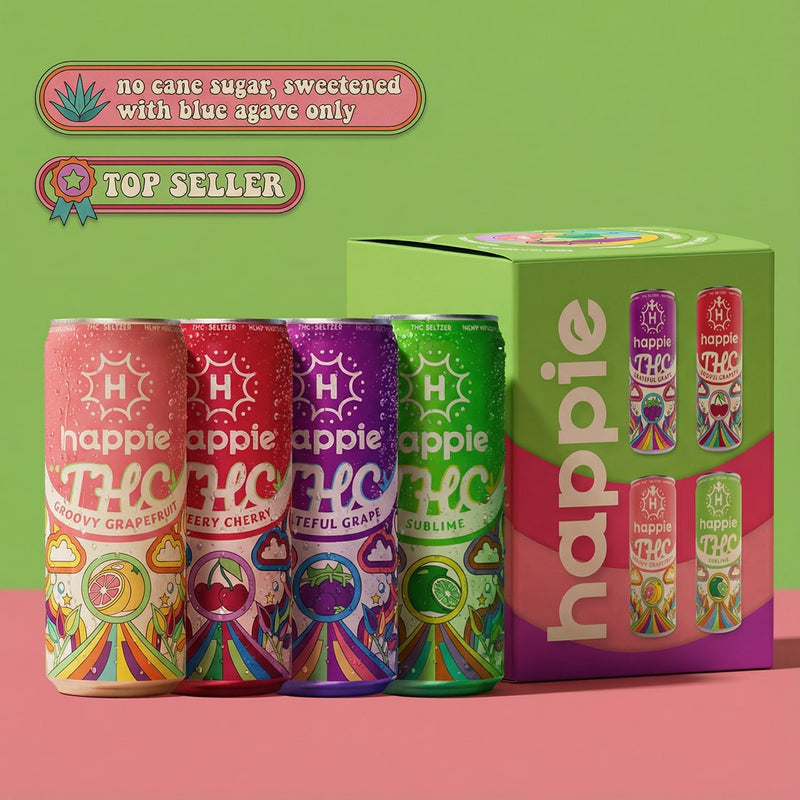
Happie makes hemp-derived Delta-9 beverages in 5 mg and 10 mg cans for adults 21 and over, batch tested, with certificates of analysis available for every lot. You can see the current lineup at [INTERNAL LINK: THC collection page — verify handle].
We are not going to run a countdown clock at you. The honest position is that this category has a federal date on it, our products are over the line as the law is currently written, several bills could change that, and none of them has moved out of committee. We would rather you hear that from us than work it out from a news alert in December.
If you want the deeper background on how these drinks compare to alcohol, we wrote about that separately: [INTERNAL LINK: THC seltzer vs. beer — verify handle].
What We Are Watching
Three things between now and December 11, in the order they actually matter. Whether payment processors follow Square's October 15 and November 5 lines, because those arrive first and need no legislation. Whether the FDA publishes its cannabinoid lists and its guidance on what counts as a "container," because the standard's edges are still undrawn. And whether the beverage carve-out finds a legislative vehicle, since standalone bills in this Congress have mostly not moved on their own.
We will update this page as those resolve. If you are making inventory or purchasing decisions against these dates, confirm them against a current source before you act — including this one. The date at the top of this article is there for a reason.
About the author. Pete Olander is the founder of Happie Beverages, which makes hemp-derived Delta-9 THC beverages for adults 21 and over, and Fungi Fusion functional mushroom seltzers. He works directly on formulation, sourcing, co-packing, and distribution, and has spent 2026 planning a beverage business against a federal deadline that keeps moving.
This article is general information, not legal advice. Happie is a beverage company, not a law firm. For guidance on your circumstances, consult a qualified attorney.
Share:
Shop the Lineup
Pair what you just read with the drinks made for it.


-

The THC Drink Ban Has Two Deadlines Now, Not One
The hemp THC deadline moved to December 11 — but one class of product still loses legal status November 12. Which date applies to what, from a founder inside it. -

Mushroom Drinks Instead of Alcohol: The Sober-Curious Swap That Actually Sticks
Swapping alcohol for mushroom drinks? Here's how functional mushroom drinks work as an alcohol alternative — the science, the ritual, and how to choose.
-

Fruiting Body vs Mycelium: The Mushroom Supplement Difference That Actually Matters
Fruiting body vs mycelium: the mushroom supplement difference that decides whether you are drinking real potency or the grain it was grown on.


