


Reishi Mushroom Benefits: The Calm Adaptogen Nobody Talks About
Lion's mane gets the headlines. Cordyceps gets the athletes. Reishi gets ignored — and that's a mistake.
Walk down the functional aisle and you'll see "focus" and "energy" splashed across every can. Almost nobody is selling the thing most people actually run short on: a way to come down. Reishi mushroom benefits don't show up as a buzz or a boost. They show up as the absence of edge — the quiet that makes the other two mushrooms in the stack worth taking in the first place.
That's why we put 400mg of it in every can of Fungi Fusion, even though it's the ingredient that wins zero attention on a label.
Why Reishi Is Called the "Mushroom of Immortality"
Reishi (Ganoderma lucidum) earned its title as the "Mushroom of Immortality" in ancient China, where it was known as Lingzhi — literally "herb of spiritual potency." The Shen Nong Ben Cao Jing, compiled around 200 CE from oral traditions stretching back centuries further, placed Reishi in its highest category of medicines — the "superior" class reserved for substances believed to promote longevity without side effects.
This wasn't folk superstition from the fringes. Reishi was a royal ingredient. Wild Lingzhi was so rare that it was reserved for emperors and nobility. Traditional Chinese Medicine practitioners prescribed it to balance Qi across the heart, lungs, liver, and kidney channels — essentially, to restore equilibrium across the body's major systems.
What's remarkable isn't that ancient practitioners valued Reishi. It's that they described its effects with language that maps almost directly onto modern clinical findings: calm the mind (anxiolytic effects), support breathing (immune modulation), promote balance (adaptogenic response). They didn't have the vocabulary of immunology, but they were observing the same outcomes researchers are now quantifying.
What Reishi Mushroom Benefits Actually Are
Reishi (Ganoderma lucidum) is an adaptogenic mushroom traditionally used to support calm, stress resilience, and sleep quality — the opposite end of the spectrum from a stimulant. Its primary active compounds are triterpenes (including ganoderic acids) and beta-glucan polysaccharides, which is where most of the research interest sits.
Unlike caffeine, reishi doesn't add anything to your system that you later have to pay back. It's classified as an adaptogen, meaning it's studied for helping the body modulate its own stress response rather than overriding it. Used in traditional Chinese medicine for more than 2,000 years — where it earned the name lingzhi, the "mushroom of immortality" — reishi has only recently been pulled into clinical study in the West.
Important honesty up front: human research on reishi is younger and thinner than the marketing in this category implies. The mechanisms are promising and the traditional-use record is long, but this is a "research is still developing" ingredient, not a settled one.
Reishi for Stress: The Adaptogen Case
The most-cited human evidence for reishi and stress comes from a 2005 randomized, double-blind, placebo-controlled trial. Tang and colleagues, publishing in the Journal of Medicinal Food, gave a Ganoderma lucidum polysaccharide extract to participants experiencing neurasthenia — a condition marked by fatigue, irritability, and low stress tolerance — and reported meaningful improvements in sense of wellbeing and fatigue versus placebo.
One controlled trial isn't a verdict, and the researchers said as much. But it lines up with what an adaptogen is supposed to do: not sedate you, not wire you, but widen the gap between a stressor and your reaction to it.
That distinction matters for how you'd actually use it. Reishi isn't a "take it when you're stressed" acute fix. The adaptogen model is about consistency — a daily input that compounds, more like training than like a painkiller.
Pete's Perspective: Why Reishi Was Non-Negotiable in the Formula
When we built the Fungi Fusion stack, the easy version would have been lion's mane and cordyceps alone — focus and energy, the two mushrooms that sell themselves. We added reishi on purpose, and it was the most-debated ingredient on the formulation sheet.
Here's the thinking. A functional drink built only on "up" ingredients is just a nicer-looking energy drink. What I kept hearing from early drinkers — and what I felt myself, coming off a six-to-eight-cup coffee habit — was that the problem was never only getting going. It was the inability to come back down without a glass of wine doing the job. Reishi is the ingredient that makes the can a balance product instead of a stimulant. It's the one I'd take out last.
Reishi for Sleep: What the Research Suggests
Reishi is studied for supporting sleep quality, and the early mechanism work points to the nervous system rather than to sedation. In a 2007 study published in Pharmacology Biochemistry and Behavior, Chu and colleagues found that a Ganoderma lucidum extract influenced sleep in animal models through a GABAergic mechanism — the same calming neurotransmitter pathway involved in natural relaxation.
What that means in plain terms: reishi appears to nudge the systems that help the body settle, rather than knocking it out the way a sleep aid does. People reach for it as part of a wind-down routine, not as a switch.
The honest caveat is that much of the sleep-specific evidence is preclinical — animal and mechanistic studies, not large human trials. We won't tell you reishi "treats" anything, because the research doesn't support that and we don't make medical claims. What we'll say is that the calm-and-settle profile is consistent across centuries of traditional use and the early science, and that it's a sensible reason to keep an evening-friendly, caffeine-free option in rotation.

Reishi's Active Compounds: What Actually Does the Work
Two compound families drive the majority of Reishi's documented effects: polysaccharides (primarily beta-glucans) and triterpenes (primarily ganoderic acids). Understanding these helps explain why extraction method matters as much as dosage.
Beta-glucans are large carbohydrate molecules — specifically (1,3)(1,6)-beta-D-glucans — that interact with pattern recognition receptors on immune cells. Researchers have identified at least 35 distinct bioactive polysaccharides in Reishi. When beta-glucans bind to receptors on macrophages, dendritic cells, and natural killer cells, they modulate both innate and adaptive immune responses. This is the mechanism behind the immune-enhancing results in the Chen et al. trial.
Ganoderic acids are triterpenes unique to the Ganoderma genus. Over 150 different ganoderic acids have been isolated from Reishi, with documented anti-inflammatory, hepatoprotective (liver-protecting), and antioxidant properties. These are the compounds responsible for Reishi's calming, balancing reputation — they help regulate the inflammatory cascade that drives everything from stress response to sleep disruption.
Here's the critical detail most supplement brands gloss over: beta-glucans are water-soluble, while ganoderic acids are alcohol-soluble. A single-extraction product — whether hot water or alcohol alone — only captures half the picture. This is why dual extraction isn't a marketing term. It's a biochemical necessity for a complete Reishi profile.
The Dose Question, Answered Honestly
Most clinical reishi studies use 1.5g to 5.4g of extract per day, while Fungi Fusion delivers 400mg of dual-extracted reishi per can. That's a smaller, daily-use dose by design — and the extraction method is the reason it still earns its place.
Reishi's active compounds split across two solubility groups: beta-glucans (water-soluble) and triterpenes (alcohol-soluble). A single-extraction powder captures only one. Fungi Fusion uses dual-extracted reishi, which pulls both fractions and runs roughly 3–7x the bioavailability of raw mushroom powder — so the milligram number on a dual-extract can isn't doing the same work as the same number on a basic powder.
We're transparent that 400mg is a functional daily contribution to a three-mushroom stack, not a high-dose clinical protocol in a can. If you want the therapeutic-trial dose, you're looking at a concentrated supplement, not a beverage. What a can is built for is consistency — the daily, low-friction input an adaptogen actually rewards. For the full breakdown of how dosing, extraction, and label literacy separate real from fake, see our complete guide to functional mushroom drinks.

Reishi Drinks vs. Capsules vs. Powders
Reishi drinks — ready-to-drink beverages infused with Reishi extract — represent the fastest-growing format in the functional mushroom category. But how do they compare to traditional supplement formats?
| Format | Bioavailability | Convenience | Taste | Consistency | Cost per Serving |
|---|---|---|---|---|---|
| Functional Beverages | High (liquid absorption, pre-extracted) | Grab-and-go | Flavored, enjoyable | Pre-measured dose | $3–5 |
| Capsules | Moderate (depends on extraction) | Easy | None | Pre-measured | $0.50–2 |
| Loose Powder | Variable (often raw, not extracted) | Requires mixing | Earthy, bitter | User-measured | $0.30–1.50 |
| Tinctures | High (alcohol-extracted) | Dropper dosing | Strong, medicinal | Dropper variance | $1–3 |
The advantage of a functional beverage format isn't just convenience. Liquid delivery means faster absorption — the extract is already dissolved and doesn't require capsule breakdown in the stomach. Pre-measured dosing eliminates guesswork. And when Reishi is formulated alongside complementary ingredients — like the ocean-derived magnesium and calcium (Aquamin) in Fungi Fusion — you get synergistic benefits that standalone Reishi supplements can't match.
The tradeoff is cost per serving. Capsules and powders are cheaper on a per-dose basis. But the compliance rate matters: the supplement you enjoy drinking every day delivers more benefit over time than the capsule gathering dust in your cabinet.
Where Reishi Fits in the Trio
Reishi is the balance leg of a three-part stack: lion's mane for focus, cordyceps for sustained energy, and reishi to keep the other two from tipping into edge. Together they're designed to lift without spiking and settle without sedating.
That's the whole thesis behind Fungi Fusion: 900mg lion's mane, 700mg cordyceps, and 400mg reishi, all dual-extracted, in a caffeine-free can with marine-sourced magnesium and calcium for hydration — at 40 calories and 9g of sugar. Same can, different occasion. The cordyceps carries the morning (here's why it beats a third cup of coffee); the reishi is why the can still makes sense at 6pm.
The category is crowded with drinks engineered to push you up. Very few are honest about the fact that "functional" should also mean knowing how to land. Reishi is the unglamorous ingredient that does it.
Frequently Asked Questions
What are the main reishi mushroom benefits?
Reishi mushroom benefits are associated with calm, stress resilience, and sleep quality. Its active triterpenes and beta-glucan polysaccharides are studied as an adaptogen — meaning reishi is researched for helping the body modulate its own stress response rather than stimulating or sedating it. Human research is still developing, so reishi is best understood as a daily-use calming adaptogen, not a medical treatment.
Is reishi a stimulant like caffeine?
No. Reishi is the opposite of a stimulant. It's a caffeine-free adaptogen traditionally used to support calm and wind-down, which is why it pairs well with an evening routine. In Fungi Fusion, reishi balances the more energizing mushrooms (lion's mane and cordyceps) so the drink lifts without spiking and settles without sedating.
How much reishi is in a can of Fungi Fusion?
Each can of Fungi Fusion contains 400mg of dual-extracted reishi. Dual extraction captures both the water-soluble beta-glucans and the alcohol-soluble triterpenes, giving roughly 3–7x the bioavailability of raw mushroom powder. It's a functional daily dose built for consistency as part of a three-mushroom stack, not a high-dose clinical protocol.
Pete Olander is the Founder & CEO of Happie® Beverages, makers of Fungi Fusion functional mushroom drinks and Happie Delta-9 THC seltzers. He builds Happie's formulas from the ingredient up, with a science-first approach to functional beverages.
Is 400mg of Reishi enough to be effective?
Yes — when the extract is dual-extracted and concentrated. Happie Fungi Fusion uses a fermentation + hot water + 90-day alcohol extraction process that yields 3–7x the bioavailability of single-extraction or raw mushroom powder. The 400mg per can delivers active compound levels within the effective range established by clinical studies, calibrated for daily use without cycling.
Can you drink Reishi every day?
Daily consumption is consistent with both traditional use and modern research protocols. The 84-day Chen et al. clinical trial administered Reishi beta-glucans daily with no adverse effects on liver or kidney function. Traditional Chinese Medicine practitioners prescribed Lingzhi for continuous use — it was classified as a "superior" herb specifically because it was considered safe for long-term consumption.
How does Reishi compare to Lion's Mane and Cordyceps?
Each mushroom serves a distinct function. Reishi is the balance and calm anchor — immune modulation, stress adaptation, sleep support. Lion's Mane targets cognitive function — nerve growth factor stimulation, focus, memory. Cordyceps drives physical energy — oxygen utilization, endurance, cellular energy production. Happie Fungi Fusion combines all three (400mg Reishi, 900mg Lion's Mane, 700mg Cordyceps) because the stack addresses multiple systems simultaneously.
Are there side effects of Reishi mushroom?
Reishi is generally well-tolerated at recommended doses. The Chen et al. (2023) clinical trial reported no adverse changes in kidney or liver function markers over 84 days. Some individuals may experience mild digestive adjustment when starting any new supplement. People on blood-thinning medications or immunosuppressants should consult a healthcare provider before adding Reishi, as it may interact with these medications.
What makes a Reishi drink better than Reishi powder?
Functional Reishi drinks offer pre-extracted, pre-dosed, liquid-form delivery — meaning faster absorption, consistent dosing, and no preparation required. The extraction has already been done for you, which matters because raw Reishi powder contains compounds locked inside chitin cell walls that your digestive system can't efficiently break down without extraction processing.
Where Reishi Is Heading
The functional mushroom market is projected to reach $25.6 billion by 2035, growing at 8.6% annually. Reishi currently holds the largest segment share at 31.4%, driven by its broad adaptogenic profile and growing consumer recognition. The adaptogenic beverage segment alone is forecast to hit $2.7 billion by 2034.
But the more interesting shift isn't market size — it's consumer sophistication. Two years ago, I had to explain what an adaptogen was at every trade show. Now buyers at retail chains are asking about extraction ratios and polysaccharide standardization. The market is maturing past the novelty phase and into the efficacy phase, where transparent labeling, clinical dosing, and verifiable sourcing become the differentiators.
That's exactly the market Happie was built for. We've been formulating at clinical doses with dual-extracted, US-sourced mushrooms since the beginning — not because the market demanded it then, but because the science demanded it always. As consumers get smarter about what's actually in their functional beverages, the brands cutting corners on extraction and dosage are going to get exposed. The brands built on transparency and efficacy are going to win.
Reishi has survived 2,000 years of scrutiny. The question was never whether it works. The question was always whether modern products would respect the ingredient enough to deliver it properly. We think we've answered that.
Pete Olander is the Founder and CEO of Happie Beverages, a premium functional beverage company producing adaptogenic mushroom drinks and hemp-derived Delta-9 THC beverages. With a background spanning J.P. Morgan and Nutrition53, Pete has spent six years building Happie into a multi-channel brand with distribution across Georgia, Pennsylvania, Oklahoma, Louisiana, and a national D2R network covering 80,000 retail locations.
Share:
Shop the Lineup
Pair what you just read with the drinks made for it.
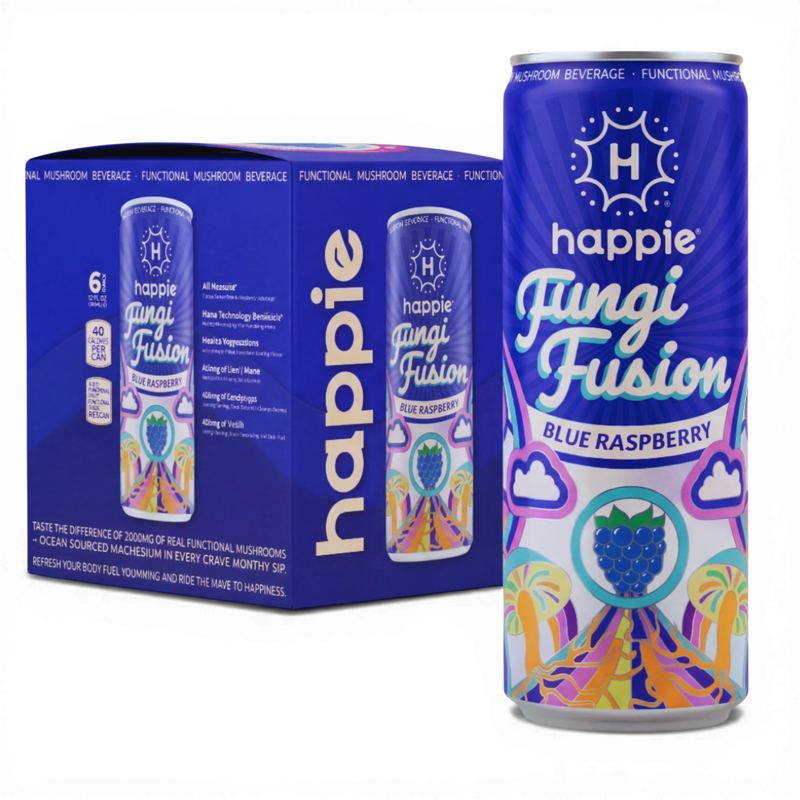

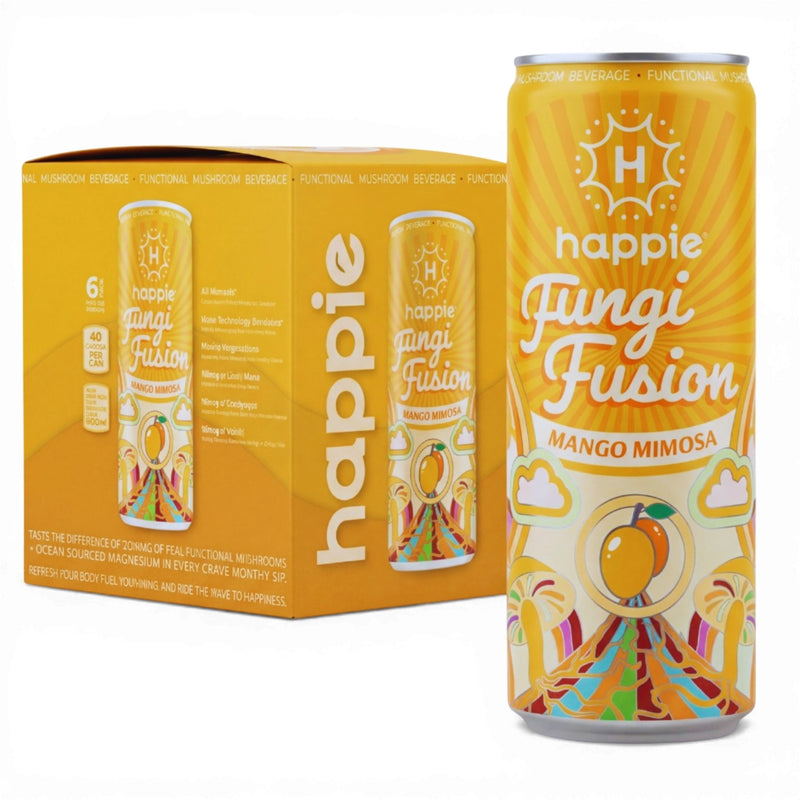

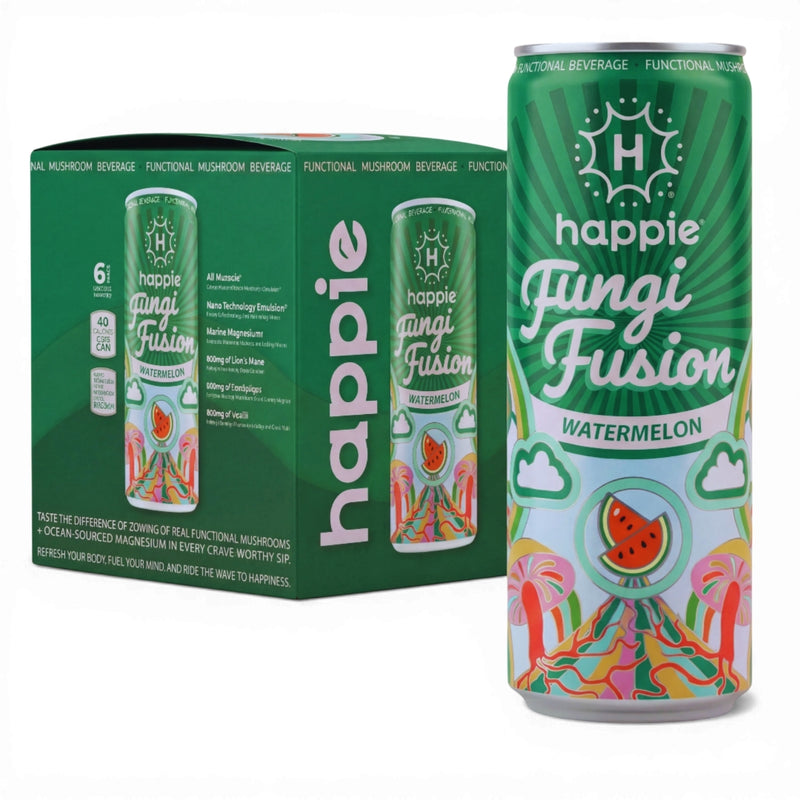

-

The THC Drink Ban Has Two Deadlines Now, Not One
The hemp THC deadline moved to December 11 — but one class of product still loses legal status November 12. Which date applies to what, from a founder inside it. -

Mushroom Drinks Instead of Alcohol: The Sober-Curious Swap That Actually Sticks
Swapping alcohol for mushroom drinks? Here's how functional mushroom drinks work as an alcohol alternative — the science, the ritual, and how to choose.
-

Fruiting Body vs Mycelium: The Mushroom Supplement Difference That Actually Matters
Fruiting body vs mycelium: the mushroom supplement difference that decides whether you are drinking real potency or the grain it was grown on.


