


Lion's Mane Drink Benefits: Why Functional Mushroom Beverages Are Your New Go-To
You've probably noticed lion's mane showing up everywhere — in your coffee, your supplement aisle, and now in your drink cooler. But here's the thing: not all lion's mane drinks are created equal. The difference between a token dusting of mushroom powder and a genuinely functional dose is the difference between marketing hype and actually feeling something.
Let's break down what lion's mane drinks can actually do for you, what to look for on the label, and why the functional mushroom beverage category is exploding in 2026.
What Is Lion's Mane (And Why Is Everyone Drinking It)?
Lion's mane (Hericium erinaceus) is a shaggy, white mushroom that's been used in traditional Chinese medicine for centuries. In the last decade, modern research has caught up with what practitioners already knew: this fungus has a remarkable affinity for supporting brain health.
Studies have shown that lion's mane stimulates the production of nerve growth factor (NGF), a protein essential for the growth, maintenance, and survival of neurons. In practical terms, that translates to sharper focus, clearer thinking, and better memory recall — the kind of cognitive edge that used to require a double espresso and a prayer.
But here's where it gets interesting for the beverage world. When lion's mane is properly extracted and delivered in a ready-to-drink format, you get those cognitive benefits in a form that's fast, convenient, and — when done right — genuinely delicious.
The Real Benefits of Lion's Mane Drinks

Focus Without the Jitters
Unlike caffeine, which floods your system with cortisol and adrenaline, lion's mane supports sustained mental clarity without the spike-and-crash cycle. It's the difference between feeling wired and feeling sharp. For anyone who's ever hit that 2 PM wall and reached for another coffee, a lion's mane drink offers a cleaner path to afternoon productivity.
Mood and Stress Support
Research suggests lion's mane may support healthy mood by modulating inflammation and promoting neuroplasticity. While we're not making medical claims here — nobody should — the anecdotal evidence from regular users is hard to ignore. People consistently report feeling calmer, more centered, and less reactive to daily stress.
Gut-Brain Connection
Lion's mane is a prebiotic powerhouse that supports healthy gut bacteria. Given the well-established gut-brain axis, supporting your digestive health with lion's mane may have downstream effects on mental clarity and emotional balance. It's the kind of two-for-one that makes functional ingredients so compelling.
What Separates a Good Mushroom Drink From a Great One
This is where most brands fall short. Slapping "mushroom" on a label is easy. Delivering a functional dose with real bioavailability takes serious formulation work. Here's what to look for:
Dosage Matters — A Lot
Many mushroom drinks on the market contain 100-250mg of lion's mane per serving. That's essentially a garnish. Clinical research generally uses doses of 500mg or higher to see meaningful cognitive effects. If your drink doesn't list the exact milligrams per serving, that's a red flag.
The gold standard? Look for drinks with 500mg+ of lion's mane per serving, ideally combined with complementary adaptogens like cordyceps (for natural energy) and reishi (for calm and recovery).
Extraction Method Is Everything
Raw mushroom powder has poor bioavailability — your body simply can't access most of the beneficial compounds. Dual extraction (combining hot water extraction and alcohol extraction) unlocks both the water-soluble polysaccharides and the alcohol-soluble terpenoids, dramatically increasing what your body can actually absorb.
Some brands go even further, using extended fermentation processes and stabilization techniques to push bioavailability 3-7x higher than standard powders. That's the difference between drinking mushroom-flavored water and drinking something that genuinely works.
The Full Spectrum Stack
Lion's mane is powerful on its own, but it reaches another level when combined with complementary mushrooms. Here's the stack that functional beverage formulators are gravitating toward in 2026:
- Lion's Mane (800-1000mg): Cognitive support, focus, and memory
- Cordyceps (600-800mg): Natural energy, endurance, and oxygen utilization
- Reishi (300-500mg): Stress adaptation, immune support, and recovery
This trio covers the full spectrum of what most adults are looking for: think better, feel more energized, and manage stress more effectively — all without caffeine, sugar crashes, or next-day regret.
Why Mushroom Drinks Are Winning in 2026
The functional beverage market is projected to hit nearly $200 billion by the end of 2026. Within that, mushroom-infused drinks are one of the fastest-growing segments, and it's not hard to see why.
The Shift From Ingredient-Led to Benefit-Led
Consumers in 2026 aren't buying "mushroom drinks." They're buying focus, energy, calm, and recovery. The brands that are winning are the ones marketing the outcome, not the ingredient. You'll see this reflected in everything from product names ("focus blend" vs. "mushroom drink") to how benefits are described on packaging.
Clean Label Expectations
Today's functional beverage consumer reads labels. They want to know exactly what's in the can, where it came from, how it was extracted, and whether it's been tested. Vegan, non-GMO, no artificial flavors or colors — these aren't differentiators anymore, they're table stakes.
The Afternoon Coffee Replacement
Here's the trend that should excite anyone in the mushroom drink space: a significant chunk of consumers are replacing their afternoon coffee with functional mushroom beverages. The reason is simple — they want sustained energy and focus without the cortisol spike, the jitters, or the sleep disruption that comes from caffeine after noon.
A well-formulated mushroom drink with cordyceps for energy and lion's mane for focus delivers exactly that. It's not anti-coffee — it's pro-how you actually want to feel at 3 PM.
Lion’s Mane Focus vs. Caffeine: A Genuine Comparison
Lion’s mane focus and caffeine focus are not the same thing. They operate through completely different biological mechanisms.
Caffeine works by blocking adenosine receptors — the receptors that signal fatigue — creating a temporary feeling of alertness without actually restoring your energy reserves. When the blocking effect wears off, accumulated adenosine floods back in at once. That’s the crash.
Lion’s mane works upstream. Hericenones and erinacines support the neurons themselves — the underlying hardware your cognition runs on. There’s no adenosine receptor interaction, no artificial urgency signal, no withdrawal curve. Benefits build gradually with consistent daily use rather than spiking and dropping over a few hours.
A 2019 study in Biomedical Research (Saitsu et al.) found that healthy adults who consumed Hericium erinaceus daily for 12 weeks showed significantly improved cognitive function scores compared to baseline. The improvement was gradual and consistent — more like training than stimulation.
That distinction matters practically. If you’re supporting your brain health with lion’s mane, you’re not looking for the jolt of an espresso shot. You’re looking for a 3 PM that doesn’t feel like you hit a wall.
What to Look For on the Label
Before you grab any mushroom drink off the shelf, here's your quick checklist:
Dosage transparency: Exact milligrams of each mushroom per serving, not just a "proprietary blend" total. You deserve to know what you're putting in your body.
Extraction method: Dual-extracted or better. If the label doesn't mention extraction, assume it's raw powder with limited bioavailability.
Third-party testing: Look for brands that provide Certificates of Analysis (COAs) for every batch. This verifies potency, purity, and safety.
Clean ingredients: No artificial flavors, colors, or excessive sugar. Functional drinks should add to your health, not subtract from it.
Complementary ingredients: Bonus points for ocean-sourced trace minerals alongside the mushrooms.
The Bottom Line
Lion's mane drinks have graduated from wellness niche to mainstream functional beverage — and for good reason. When properly dosed, properly extracted, and combined with complementary adaptogens, they deliver real, noticeable benefits: sharper focus, cleaner energy, better mood, and none of the downsides of caffeine or alcohol.
The key is knowing what to look for. Not all mushroom drinks are formulated equally, and the details — dosage, extraction, testing, ingredient quality — make all the difference between a drink that works and one that's just riding the trend.
Your brain deserves better than a dusting of mushroom powder in sparkling water. Look for the real thing, and feel good about feeling good.
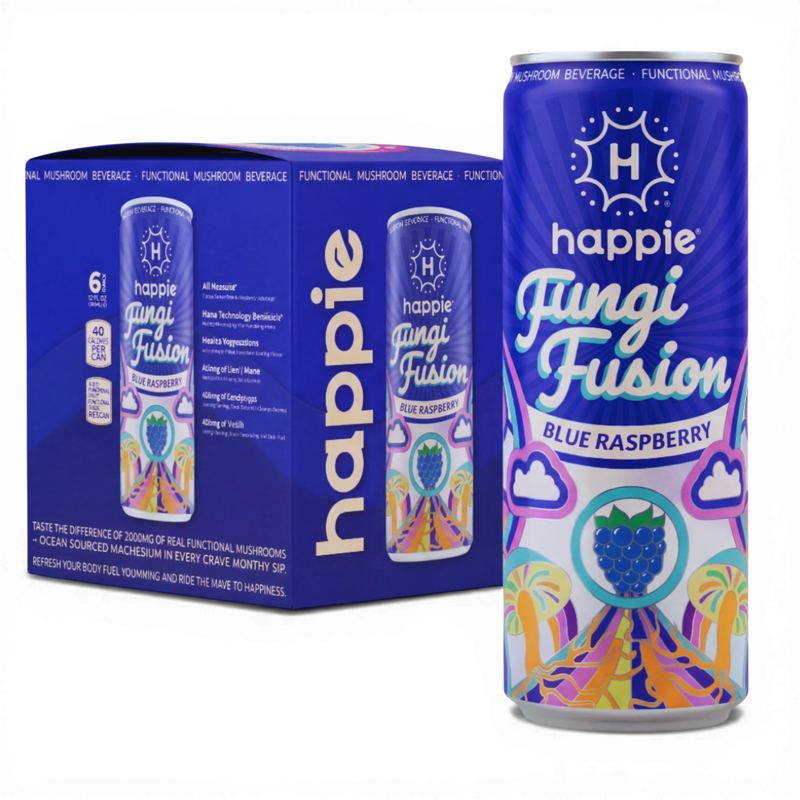
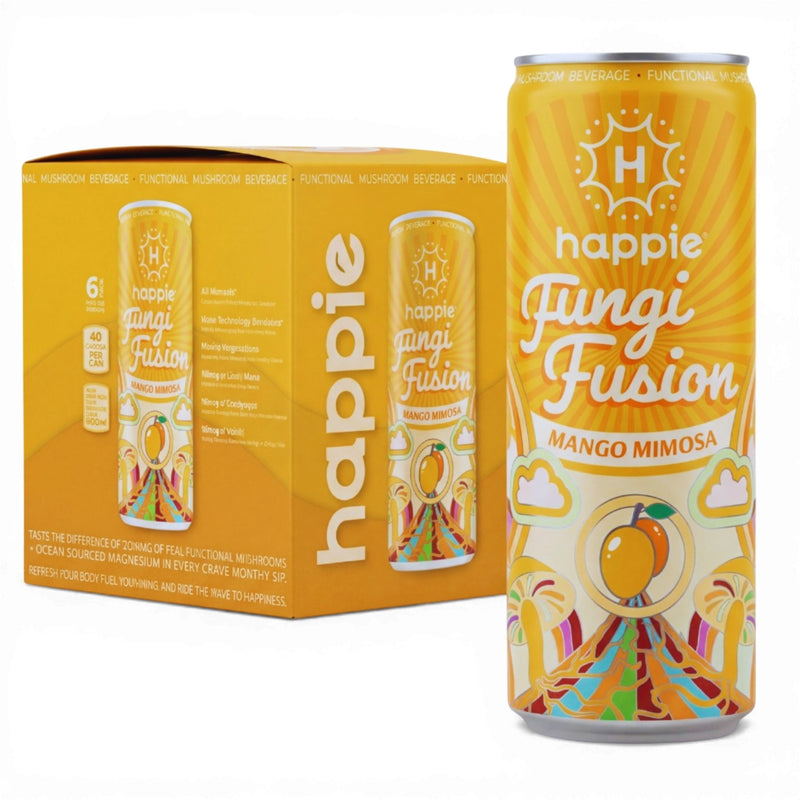
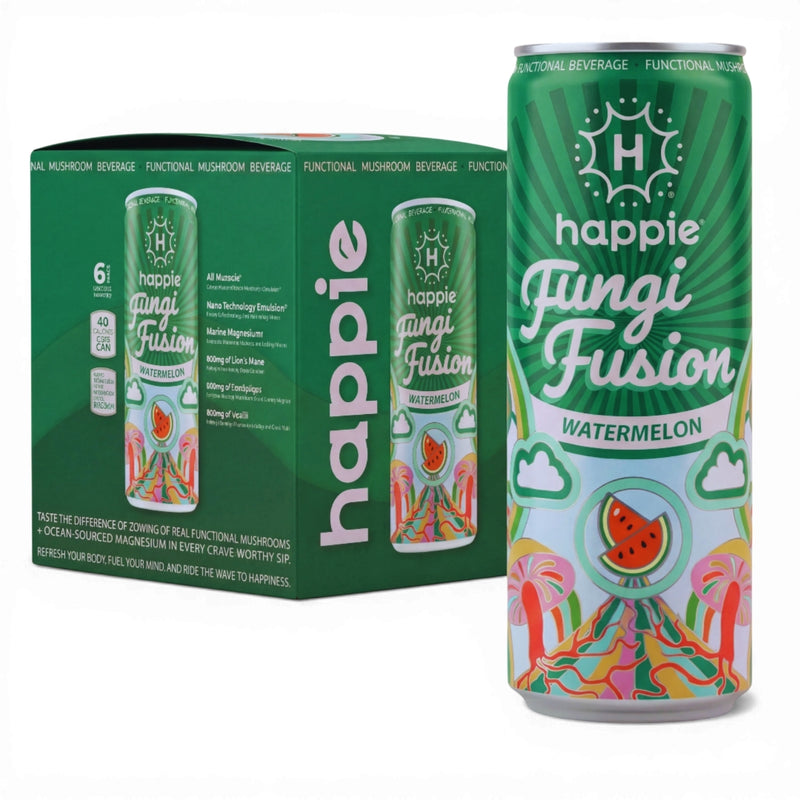
Happie's Fungi Fusion line delivers 900mg Lion's Mane, 700mg Cordyceps, and 400mg Reishi per can — dual-extracted for 3-7x bioavailability, with ocean-derived minerals, and third-party tested with COAs on every batch. Available in Mango Mimosa, Blue Raspberry, and Watermelon. Shop Fungi Fusion →
Frequently Asked Questions
What are the main lion’s mane benefits?
Lion’s mane benefits center on cognitive support through nerve growth factor (NGF) stimulation. Its active compounds — hericenones and erinacines — support the growth and maintenance of neurons, which affects memory, mental clarity, and sustained focus. Effects build with consistent daily use over 4–12 weeks, not acutely like a stimulant.
How much lion’s mane do you need to notice results?
Clinical studies showing meaningful cognitive effects use between 500mg and 3,000mg of lion’s mane extract per day. Research at 1,000–2,000mg has shown approximately 15% improvements in focus performance over 8 weeks (Journal of Functional Foods, 2023). Below 500mg, the published evidence for noticeable benefits is limited — which is why most proprietary-blend mushroom drinks don’t pass the dose test.
What is the difference between lion’s mane and other nootropics?
Most nootropics work by altering neurotransmitter activity or blocking fatigue signals — caffeine, for example, blocks adenosine receptors. Lion’s mane is one of the only functional ingredients with peer-reviewed evidence for stimulating NGF synthesis, which means it supports the neurons themselves rather than modulating short-term mental state. The mechanism is more structural than stimulant-like, and the benefits reward consistent daily use rather than acute dosing.
By Pete Olander, Founder & CEO of Happie Beverages
Share:
Shop the Lineup
Pair what you just read with the drinks made for it.



-

The THC Drink Ban Has Two Deadlines Now, Not One
The hemp THC deadline moved to December 11 — but one class of product still loses legal status November 12. Which date applies to what, from a founder inside it. -

Mushroom Drinks Instead of Alcohol: The Sober-Curious Swap That Actually Sticks
Swapping alcohol for mushroom drinks? Here's how functional mushroom drinks work as an alcohol alternative — the science, the ritual, and how to choose.
-

Fruiting Body vs Mycelium: The Mushroom Supplement Difference That Actually Matters
Fruiting body vs mycelium: the mushroom supplement difference that decides whether you are drinking real potency or the grain it was grown on.


