


Functional Mushroom Drinks vs. Adaptogen Drinks: What's the Difference?
Walk into any natural grocery store or scroll through Amazon, and you'll find dozens of cans labeled "adaptogen drink." Ashwagandha. L-theanine. Ginseng. Rhodiola. The word "adaptogen" has become the wellness industry's favorite catch-all — slapped on everything from sparkling water to protein powder.
But here's the thing most brands won't tell you: not all adaptogens work the same way, and the term itself is so broad it can mean almost anything. If you're choosing between a functional mushroom drink and a generic adaptogen beverage, the difference isn't just marketing. It's biology.
What "Adaptogen" Actually Means
An adaptogen is any natural substance that helps the body manage stress and maintain balance. That's the textbook definition. It's also incredibly vague.
To qualify as an adaptogen, a substance needs to meet three criteria: it must be non-toxic at normal doses, it must help your body cope with stress, and it must support homeostasis — your body's return to equilibrium.
Here's where the category gets crowded. Ashwagandha is an adaptogen. So is ginseng. So is reishi mushroom. So is holy basil, maca root, and rhodiola. They all "help manage stress" — but through completely different mechanisms, targeting different systems, with different research behind them.
When a beverage label says "made with adaptogens," that tells you almost nothing about what it's actually doing for your body.
The Generic Adaptogen Drink Problem
Most adaptogen beverages on the market follow the same playbook: a base of sparkling water, some natural flavoring, a sprinkle of ashwagandha, maybe some L-theanine, and a "proprietary blend" that sounds impressive on the label.
The issue isn't that these ingredients don't work. Ashwagandha has solid research behind it for cortisol regulation. L-theanine promotes calm focus. The problem is dosing and specificity.
Many adaptogen drinks use "fairy dust" amounts — just enough to put the ingredient on the label, but not enough to deliver a functional dose. And because "adaptogen" covers such a wide range of compounds, the consumer has no idea whether they're getting stress relief, immune support, cognitive enhancement, or a combination that's too diluted to do any of them well.
It's the wellness equivalent of ordering "food" at a restaurant. Technically accurate. Not particularly helpful.
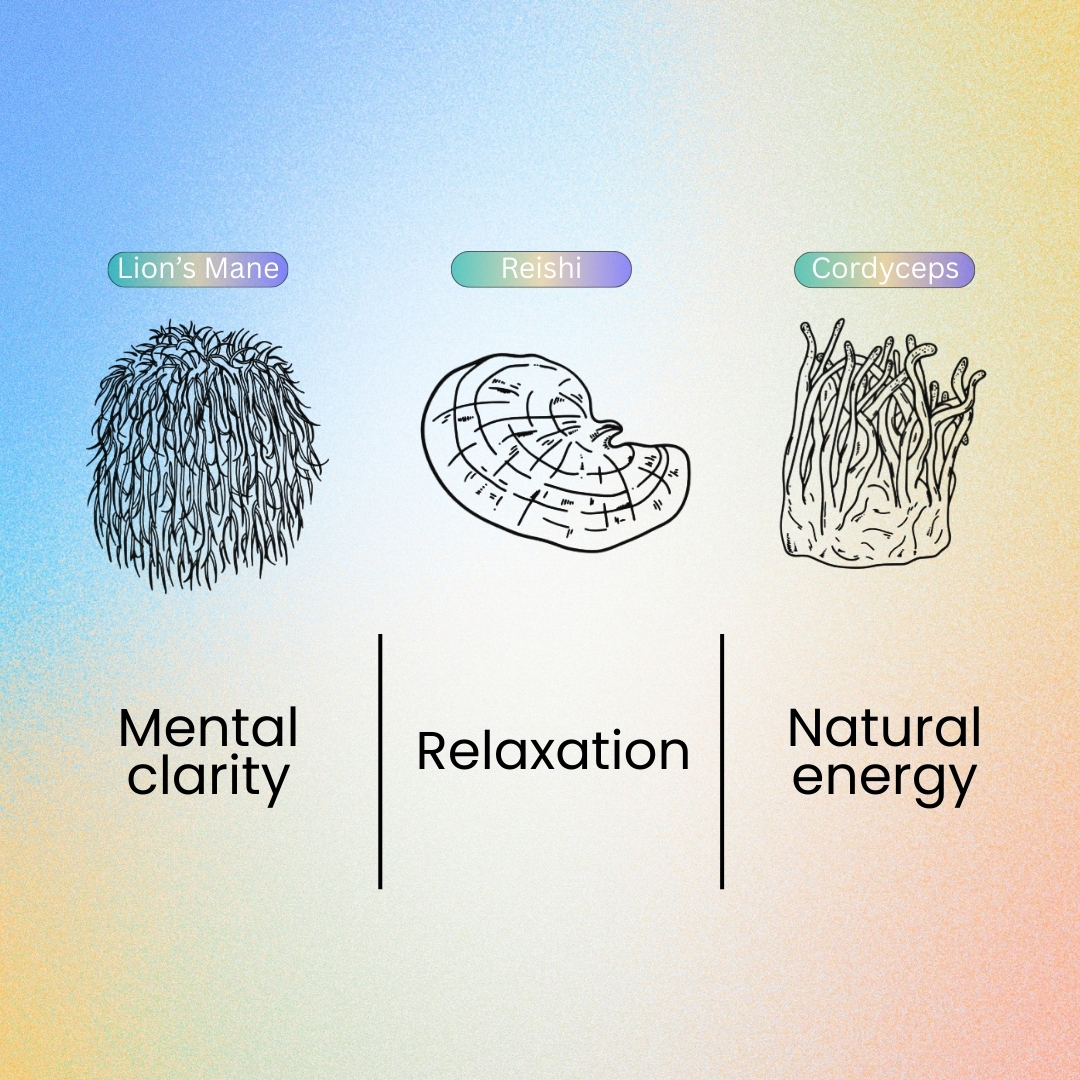
Functional Mushrooms: Same Category, Different Precision
Functional mushrooms — Lion's Mane, Cordyceps, and Reishi in particular — are adaptogens. But they're adaptogens with highly specific, well-researched mechanisms of action.
Lion's Mane doesn't just "reduce stress." Studies suggest it stimulates production of nerve growth factor (NGF), which supports neuron health, cognitive function, and mental clarity. It's a targeted nootropic — not a vague calming agent.
Cordyceps doesn't just "boost energy." Research indicates it helps the body produce adenosine triphosphate (ATP) — the actual energy currency your cells run on. It supports oxygen utilization and physical endurance at the cellular level.
Reishi is the one most people associate with classic adaptogenic effects — calming the stress response and supporting immune function. But even here, the mechanism is specific: reishi modulates the body's reaction to stressors rather than simply dampening cortisol the way ashwagandha does.
The difference matters. When you drink a functional mushroom beverage, you know exactly which systems are being supported and why.
Extraction Matters More Than You Think
Here's a detail that separates serious mushroom drinks from the rest: how the mushrooms are processed.
Most functional mushroom products use simple hot water extraction. That pulls out some beneficial compounds, but misses others — particularly the fat-soluble triterpenes in reishi and the hericenones in Lion's Mane that contribute to its cognitive benefits.
Dual extraction — combining hot water and alcohol extraction — captures both water-soluble and fat-soluble compounds. Some advanced formulations add a fermentation step before extraction, further increasing bioavailability.
The result? A dual-extracted mushroom drink can deliver 3-7x the bioavailable compounds compared to a basic extract. That's not a marginal improvement — it's the difference between a functional dose and expensive flavored water.
When evaluating any mushroom beverage, check whether the extraction method is disclosed. If a brand won't tell you how they process their mushrooms, that's your answer.
What to Look for on the Label
Not all functional mushroom drinks are created equal, either. Here's a quick framework for evaluating any functional beverage — mushroom or adaptogen:
- Specific dosages disclosed — not hidden behind "proprietary blend." If a brand won't tell you how much Lion's Mane is in the can, they're probably not using enough to matter.
- Extraction method stated — dual extraction or better for mushrooms. Hot water only? You're getting a fraction of the potential benefits.
- Third-party testing — COAs (Certificates of Analysis) available. This verifies both potency and safety.
- Functional doses — research-backed amounts, not token sprinkles. For Lion's Mane, clinical studies typically use 500-3,000mg daily. For Cordyceps, 500-1,000mg. For Reishi, 300-500mg.
- Clean ingredient list — real ingredients you recognize, not a chemistry experiment.
Why Specificity Wins
The functional beverage market is projected to keep growing at roughly 15% annually, and that growth is attracting a flood of products that lean on category buzzwords rather than actual formulation.
"Adaptogen drink" has become a marketing term more than a functional descriptor. It tells you a product contains something from a broad category of plants and fungi — but doesn't tell you what that something will do for you, how much is in there, or whether it's been processed in a way that preserves its benefits.
Functional mushroom drinks represent a more targeted approach: specific mushrooms, at functional doses, processed with methods that maximize bioavailability. You're not just getting "adaptogens." You're getting a clear blueprint for what the drink does and how.
Where Happie Fungi Fusion Fits
We built Fungi Fusion around this philosophy. Every can contains 900mg of Lion's Mane, 700mg of Cordyceps, and 400mg of Reishi — all dual-extracted for 3-7x bioavailability. We added 230mg of ocean-derived marine magnesium and 90mg of marine calcium from Aquamin for mineral support you can actually feel.
No proprietary blends. No fairy dusting. Every ingredient and dose is right on the label, backed by third-party COAs for every batch.
At 40 calories per can with organic agave, no artificial flavors, and no artificial colors — it's a functional mushroom drink designed for people who read labels and expect their beverages to actually work.
Share:
Shop the Lineup
Pair what you just read with the drinks made for it.
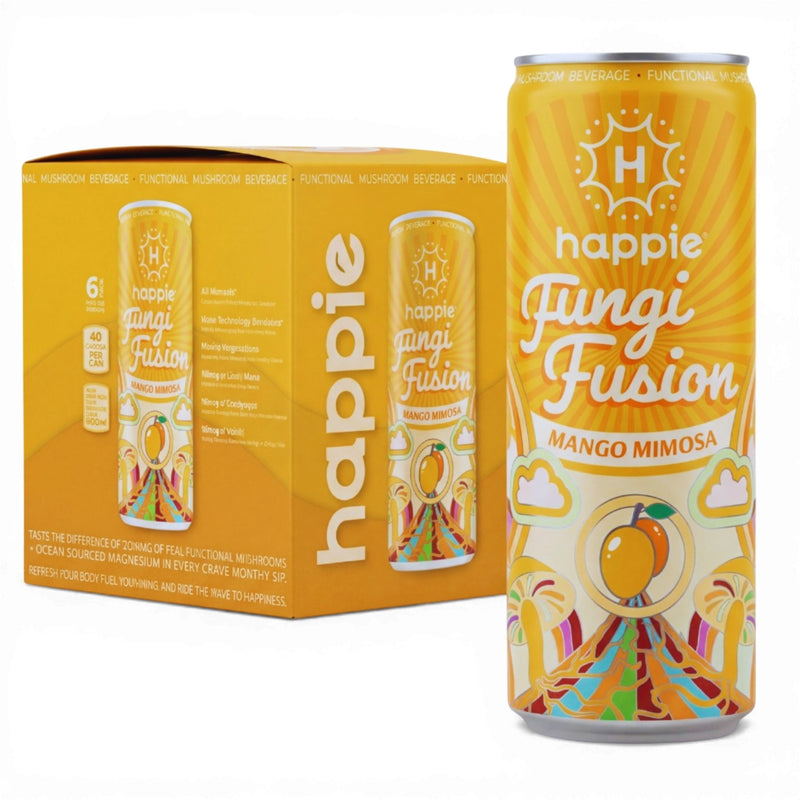

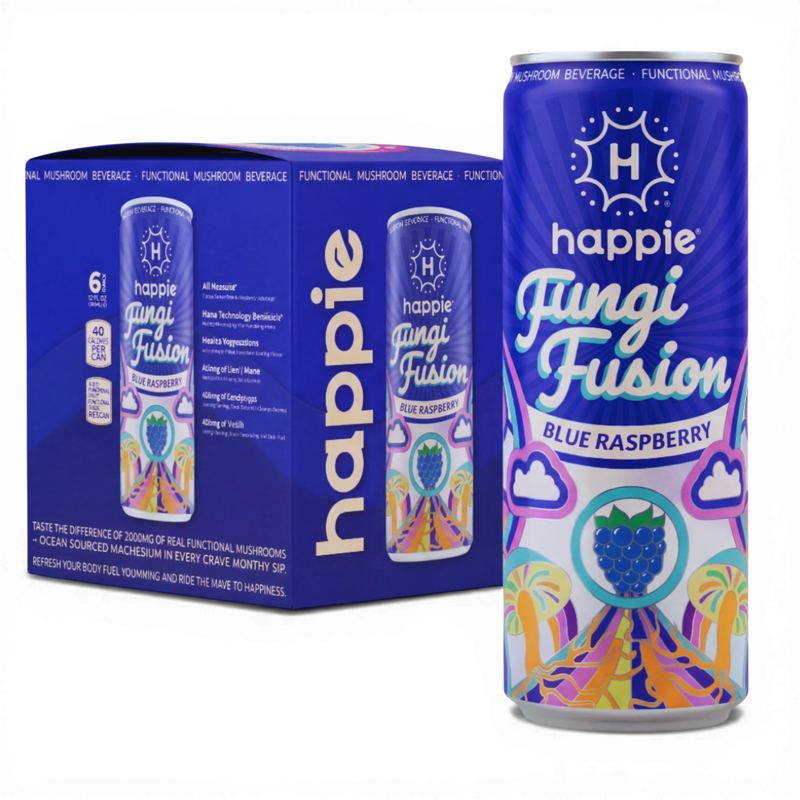

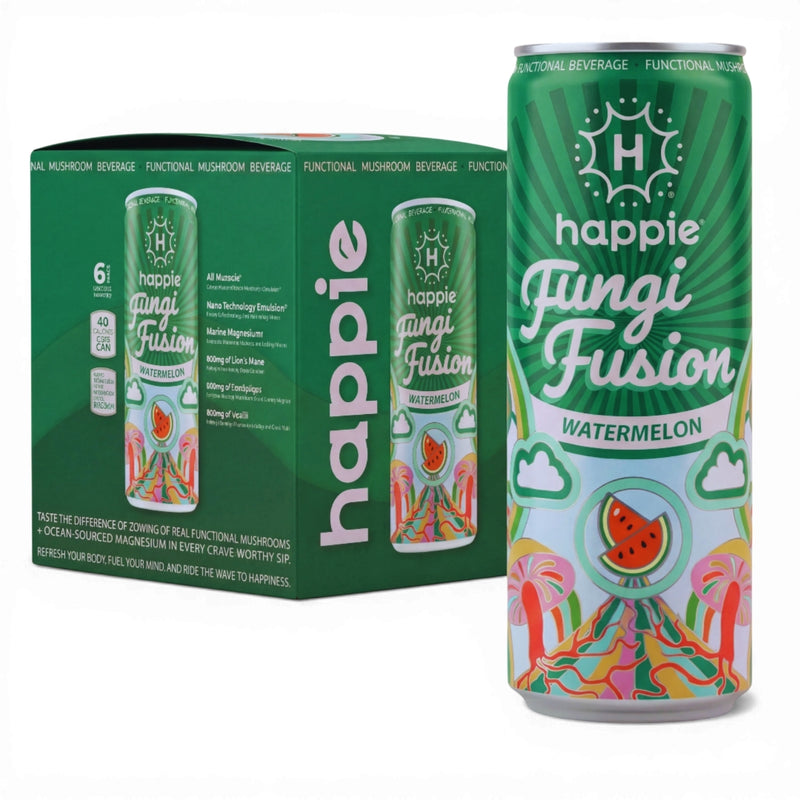

-

THC Drinks as an Alcohol Alternative: Two Founders Compare Notes
Two founders — Pete Olander (Happie® Beverages) and Laura Silverman (Zero Proof Nation) — compare notes on why wine consumption is down 13% and how hemp-derived Delta-9 THC seltzers are filling the gap between drinking and not drinking.
-

Cordyceps Mushroom Benefits: The Natural Energy Boost That Doesn't Crash You
Cordyceps doesn't work like caffeine — it improves your body's oxygen efficiency at the cellular level. Here's what 700mg of dual-extracted cordyceps actually does, how it stacks up against caffeine, and why it builds over time instead of crashing you.
-

Where Are THC Drinks Legal? A State-by-State Guide (2026)
Hemp-derived Delta-9 THC beverages are federally legal under the 2018 Farm Bill — but state laws tell a different story. Some states have embraced them fully, others have restricted or outright banned them, and a handful are still a gray zone. If you're a consumer, retailer, or distributor, knowing where THC drinks stand in your state isn't optional. Here's the complete guide.


